Kuala Lumpur, Malaysia
Must Do in Kuala Lumpur: A 3-Day Weekend Itinerary for First-Time Visitors
Rainbow stairs, rooftop sunsets, and $5 meals that put fine dining to shame
The durian ice cream vendor on Jalan Alor handed us two scoops without a word, watched our faces, and started laughing before we even swallowed. The smell had warned us. The taste caught us off guard. We went back for seconds.
Kuala Lumpur hits you with that kind of contrast everywhere. Hindu temples sit next to mosques sit next to Chinese shrines, all within a 10-minute walk. The food stalls outside a mall serve better meals than restaurants charging ten times more. You can spend $80 on a hotel suite with a view of the Petronas Twin Towers and still feel like you overpaid because everything else costs so little.
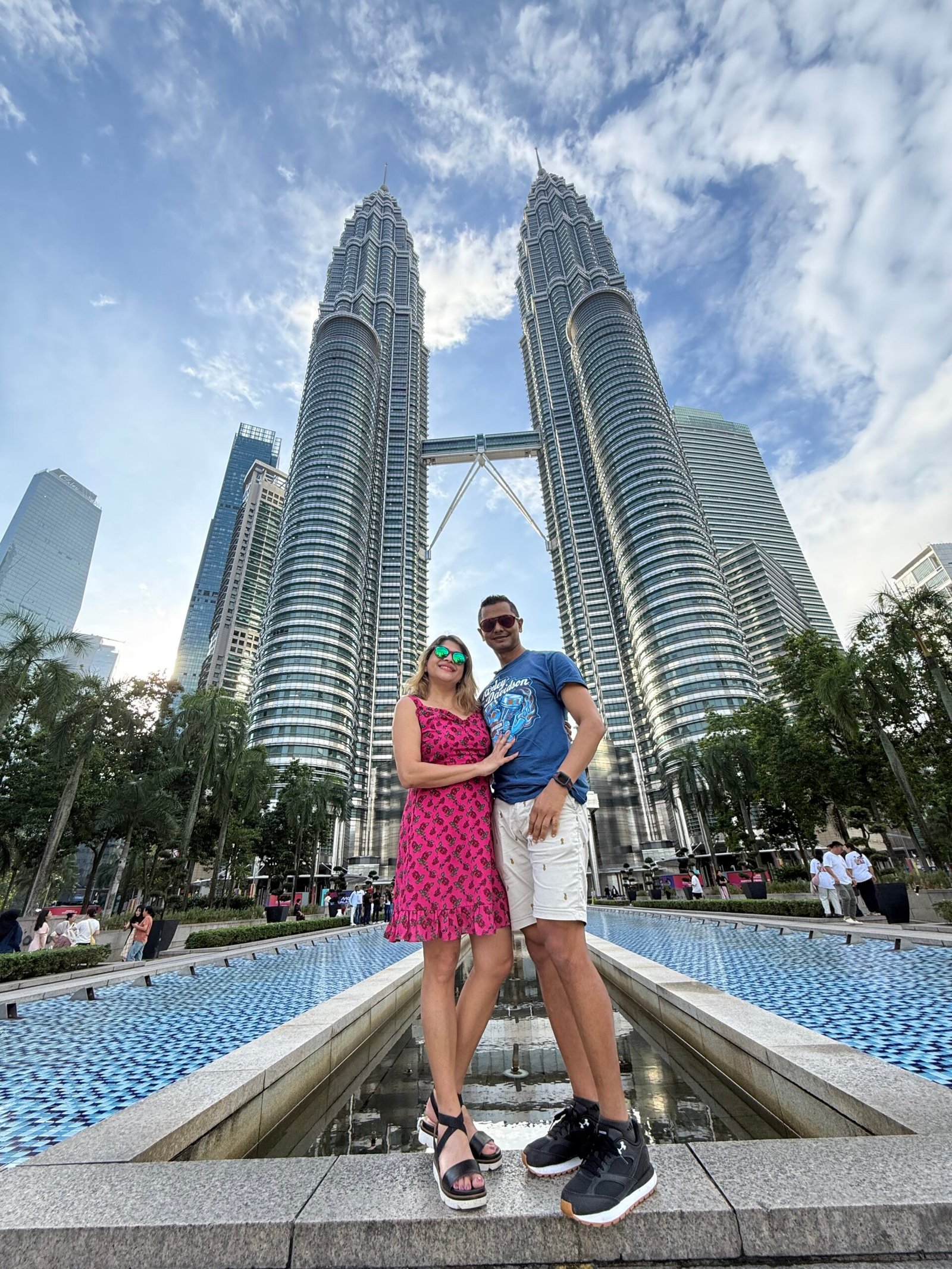
Three days gave us rooftop sunsets with the twin towers glowing orange, a morning inside a 400-million-year-old cave, and enough Michelin Bib Gourmand meals to spoil us for every airport terminal going forward. Here's exactly how we did it, what we'd change, and what you can skip.
What to Pack
- Rain jacket or lightweight rain gear — afternoon showers hit without warning
- Sunscreen — the tropical sun is relentless even on cloudy days
- Light, breathable clothes — expect 24–33°C (75–91°F) daily
- Head covering — required for mosque visits like the National Mosque
- Umbrella — cheap and sold everywhere if you forget yours
What It's Actually Like
KL is a city that doesn't make you choose between cultures. In a single afternoon, we walked through Chinatown's Petaling Street market, crossed into the courtyard of the National Mosque, and ended up at Thean Hou Temple watching incense curl past a six-tier pagoda. None of it felt forced or touristy. People were praying, shopping, eating. We were just there.
The food scene drove this trip. We ate at several Michelin Guide Bib Gourmand restaurants and rarely spent more than $5 per person. Anak Baba's fish dishes. Nam Heong's chicken rice. Lai Foong's lala noodles. These are not fancy places. They're crowded, loud, and sometimes you eat standing up. They're also the reason we kept saying "one more stop" when we should have been heading back to the hotel.
Getting around was easier than expected. The MRT, LRT, and Monorail cover most of the tourist areas, and Grab fills the gaps for about RM10–15 per ride. We walked a lot too, though some stretches lack proper sidewalks, which caught us off guard in a city this modern.
The skyline is the other thing that sticks. KL has more rooftop bars per square mile than most cities we've visited, and the Petronas Twin Towers look different from every single one. We spent three evenings testing this theory. The view from Marini's on 57 at sunset made us stop mid-sentence. That alone justified the trip.
The Itinerary
We arrived late evening at KUL and took a Grab straight to our hotel, about 10 minutes on foot from the Petronas Twin Towers. The ride from the airport took roughly an hour.
Our one move that night: eat. The blocks around KLCC are loaded with food options that stay open late. We grabbed a quick meal near the towers and walked the park briefly to see them lit up at night. No agenda, no itinerary. Just jet lag and a skyline that made jet lag feel worth it.
If you're landing late, stay close to Petronas Tower or Bukit Bintang. Both areas are walkable, surrounded by food, and central enough to start the next day without a long commute. Suites in this area go for under $80/night, which still seems like a typo.
We started early at KL Tower. This was the right call. The observation deck at 276 meters offers 360-degree views of the entire city, including a direct line to the Petronas Twin Towers. On a clear morning, you can see all the way to the Genting Highlands. The tower opens at 9am, and going early means fewer people and better light.
From the observation deck, we walked to the KL Forest Eco Park canopy walkway, a free elevated trail through a patch of old-growth rainforest right in the middle of the city. It took about 30 minutes and felt like a different country.
After the canopy walk, we grabbed a Grab to Chinatown. Petaling Street is the main drag, but the real draw is the food in the surrounding blocks. This is where several Michelin Guide Bib Gourmand spots cluster. We ate until it hurt. Lai Foong's lala noodles were the standout, and the line out front confirmed we weren't the only ones who thought so.
We swung through Central Market on the way out. It's a heritage building with local crafts and souvenirs — worth 20 minutes but not a full afternoon.
The evening was the highlight. We had a reservation at one of the rooftop bars with Petronas views. Sky Bar at Traders, Marini's on 57, and Sky 51 are all excellent options. We watched the sun drop behind the towers and the city switch from gold to neon in about 20 minutes. The drinks were the most expensive thing we paid for all trip, but the view was free.
We started at the Petronas Twin Towers. The skybridge on the 41st floor and the observation deck on the 86th floor are the main attractions. Tickets are timed slots, and the whole visit takes about 45 minutes. It felt rushed, honestly. The views are impressive, but we thought KL Tower gave us a better perspective of the city because you can actually see the Petronas Towers from there.
After the towers, we grabbed a quick claypot rice lunch at Suria KLCC mall. The mall sits at the base of the towers and has a massive food court with solid local options.
Once the afternoon heat eased, we walked through KLCC Park. The park surrounds the towers and is one of the best free things in KL. The Lake Symphony light and sound show runs every 30 minutes in the evening — we caught one at dusk and it was a nice way to see the towers from below.
From the park, we walked to Bukit Bintang and ended up on Jalan Alor, the famous street food strip. Satay smoke in the air, hawkers calling out from every stall, tables spilling into the road. We sat down, pointed at what our neighbors were eating, and ate some of the best street food of our lives. This was the must-do meal of the trip.
Early morning to Batu Caves. We took a Grab, though you can also take the KTM Komuter train (Batu Caves is the last stop). The 272 rainbow-painted stairs are the shot you've seen on Instagram, but the cave temple at the top is the real experience. A massive limestone cathedral with Hindu shrines inside a 400-million-year-old cave. We spent about 2 hours there.
The monkeys are real, bold, and everywhere. Keep food wrapped and bags closed. They are not shy.
On the way back, we stopped at Thean Hou Temple. The front is beautiful, but the back side has elaborate sculptures and another set of rainbow-colored stairs that most visitors miss entirely. We wouldn't have known either if someone hadn't mentioned it.
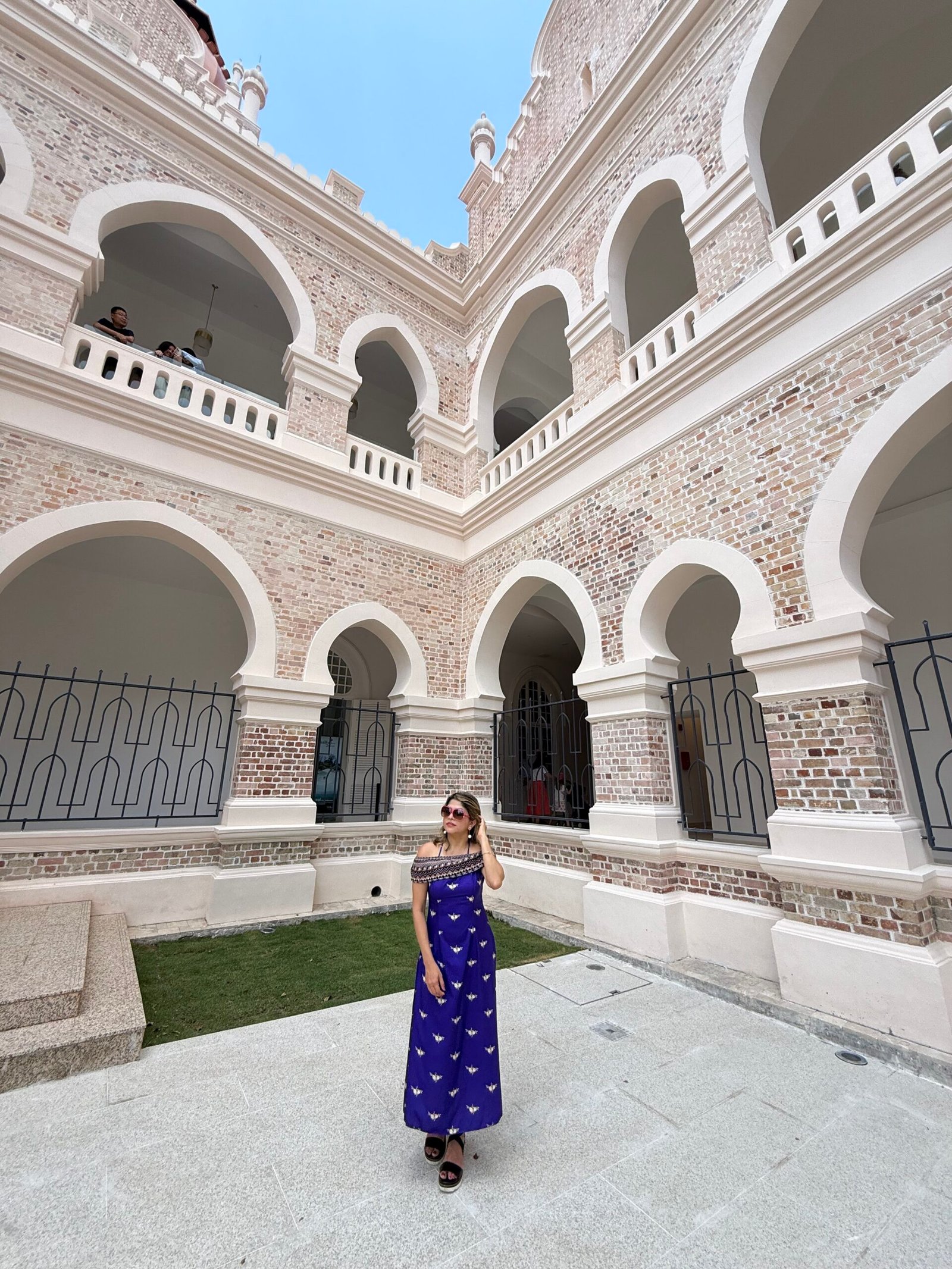
We squeezed in Merdeka Square, the National Mosque, and the River of Life before heading back to the hotel for one last swim with a Petronas Tower view. We bought a day pass at the Wet Deck pool at the Westin, which gave us the pool and the skyline in the same frame.
Our last evening was a lap of the rooftop bar circuit and a dinner at Atmosphere 360, the revolving restaurant inside KL Tower at 282 meters. The food was decent; the slow rotation through the entire KL skyline was the real course.
What's Worth It (and What Isn't)
A Hindu temple built inside a 400-million-year-old limestone cave, reached by 272 rainbow-painted stairs with a 140-foot gold statue of Lord Murugan at the base. The cave is open daily from 7am–9pm, and the temple inside the main cave is genuinely awe-inspiring. The monkeys are aggressive, the stairs are steep, and neither of those things should stop you from going.
→ Arrive by 7am if going on your own — you'll beat the tour buses and the heat. Wrap all food. The monkeys will grab anything they can see. Cover your knees and shoulders for the temple area.
The skybridge on the 41st floor and the observation deck on the 86th floor give you the inside-the-towers experience. But the visit is timed, limited, and felt rushed. We preferred KL Tower because you can actually see the Petronas Towers from there. Tickets start around $35 for non-Malaysian visitors and sell out fast. Do it if it's been on your list, but manage expectations.
→ Book tickets online at least a few days in advance. Sunset slots are the most popular and go first. Open Tuesday–Sunday, 9am–9pm. Closed most Mondays.
The observation deck at 276 meters gives you the best unobstructed view of the Petronas Twin Towers and the full KL skyline. The outdoor Sky Deck at 300 meters is even better. Visit early morning or during sunset for the best light. Open 9am–10pm daily.
→ Check the weather before booking. Afternoon rain is common and kills visibility. Morning clarity is your best bet.
The Honest Bits
Good surprises
- Street food was exceptional. Nasi lemak, chicken claypot rice, lala noodles, satay — all under $5 per person, all better than most sit-down restaurants we've been to worldwide. Jalan Alor at night was the meal of the trip.
- The rooftop bar scene is world-class. Multiple bars offer direct Petronas Twin Tower views, and the sunset from any of them would make a travel poster.
- Durian fruit and durian desserts were a highlight for us. The taste was complex and sweet. The smell, however, hits you from 20 feet away — fair warning.
- KL is genuinely multicultural in a way that feels natural, not curated. Mosques, Hindu temples, and Chinese shrines coexist within walking distance, and the food reflects all of it.
- Hotel value is unreal. We got a suite with city views for under $80/night.
Real talk
- Some streets have no sidewalks at all, which surprised us in a major city. Stick to the main tourist areas for walkability.
- Squat toilets are common, even in malls and established restaurants. Something to be aware of if you're not used to them.
- Rooftop bar drinks are priced like a Western capital. Everything else in KL is remarkably affordable, so the contrast can sting.
- Afternoon rain can roll in without warning and kill outdoor plans. We learned to carry an umbrella everywhere — it doubles as sun protection anyway.
FAQ
What currency is used in Kuala Lumpur?
Malaysian Ringgit (MYR). Cash is still useful, especially for street food vendors and smaller shops. ATMs are everywhere, and most restaurants accept cards.
What's the best time to visit Kuala Lumpur?
December through February offers slightly cooler temperatures, and May through July brings less rain. That said, KL is a year-round destination. Expect hot and humid weather daily, with temperatures between 24–33°C (75–91°F). Rain can happen any afternoon regardless of season.
Is Kuala Lumpur safe for tourists?
We felt very safe, including during evening hours in the city center. The main tourist areas like KLCC, Bukit Bintang, and Chinatown are well-lit and populated late into the night. The main concern is pickpocketing in crowded areas — keep bags in front and phones secure.
How do you get around Kuala Lumpur?
Grab is the go-to app for rides (like Uber). The MRT, LRT, and Monorail cover most tourist areas affordably. Walking is easy in the core areas around KLCC and Bukit Bintang. Download the Grab app before you arrive.
Is the Petronas Twin Towers observation deck worth the price?
It depends on what you're after. The skybridge and 86th-floor deck are iconic, but the visit is timed and short. Tickets start around $35 for non-Malaysians. We preferred KL Tower because it offers better views of the Petronas Towers themselves. You don't need to do both — pick one.
The Verdict
Kuala Lumpur is a skyline of icons like the Petronas Twin Towers rising above a city fueled by unforgettable street food at Jalan Alor. We still talk about the lala noodles four countries later.
Full guide
Batu Caves: Everything You Need to Know Before the 272-Step Climb
Full guide
KL's Best Rooftop Bars with Petronas Tower Views
Full guide
Jalan Alor Street Food: What to Eat and How to Do It Right
Who are we
We're a travel-loving couple who believe you don't have to quit your job to see the world. Between full-time careers, we've explored 50+ countries, all 50 U.S. states, and 40+ national parks — learning how to travel smarter, not harder. On VacayTips.com, we share practical itineraries, honest tips, and time-saving strategies to help busy professionals plan unforgettable trips without the stress.